
Letting Go by Dr David Hawkins: how to actually do what the book describes.
Letting Go: The Pathway of Surrender by Dr David Hawkins teaches a simple mechanism for letting go of negative emotions: notice the feeling as bodily sensations, allow it to be there without resistance, and let it run its course until it falls away. Most readers understand the book but struggle to apply it. Daily practice, one emotion at a time, is what makes it work.
You've read Letting Go: The Pathway of Surrender by Dr David Hawkins. Maybe twice. You underlined half of it. It made complete sense.
And then a feeling came up, and you had no idea what to do with it.
You're not alone. It's the most common thing I hear from people who find me after reading the book. Understanding letting go and actually letting go are two different things. The book gives you the first. This post is about the second.
I've applied the letting go technique daily for 13 years. It's the method I teach in 1:1 letting go coaching.
Here's what the book describes, why it's hard to put into practice on your own, and how to start doing it.
What is Letting Go: The Pathway of Surrender about?
Letting Go: The Pathway of Surrender is Dr David Hawkins' practical book on the mechanism of letting go. Hawkins was a psychiatrist and the author of Power vs. Force, best known for his Map of Consciousness.
Where Power vs. Force maps the levels of consciousness, Letting Go shows you how to move up them. The book describes letting go as an innate mechanism of the mind. We all did it naturally as children. Most of us learned to stop.
The book works through the negative emotions in the order they appear on the Map of Consciousness: apathy, grief, fear, desire, anger and pride. Then it moves up through courage, acceptance, love and peace. Along the way it applies letting go to stress, health, relationships and work.
The central idea is simple. Feelings are not the problem. Our resistance to experiencing them is. When we let go resisting a feeling, the energy behind it is allowed to run its course and fall away.
If you want the technique itself step by step, I've written it up in How to let go: the Letting Go technique by Dr David Hawkins explained. This post is about the book, and how to use it.
How to read Letting Go so it actually works
Most people read Letting Go like any other self-help book: cover to cover, nodding along. That's the fastest way to finish it without changing anything. It's a practice manual. Read it like one.
Read a chapter, then practise it. Each chapter takes one emotion. Before moving on, spend a few days letting go of that emotion as it comes up in your life. The anger chapter means nothing until you've sat with anger in your own body.
Start where you are, not where you want to be. The chapters on love and peace are the ones people skip ahead to. The work happens lower down. If apathy, grief or fear is what's running your life, that's your chapter.
Expect it to stir things up. When you stop suppressing, what's been pushed down starts to come up. That's the book working. It's also the point where most readers decide it isn't.
Keep it beside you. Letting Go is a book to return to. Pick it up when a feeling arrives, find the chapter, and practise there and then.
I've read the book but I'm struggling to let go. Why?
The book makes letting go sound simple. It is simple. That's not the same as easy. These are the five places I see readers get stuck.
1. Reading it is not practising it. You can understand every page and still not have let go of a single feeling. The book is read with the mind. Letting go happens below it. Knowledge of the technique is not the technique.
2. Labelling instead of feeling. "I'm anxious." "I'm angry." Those are labels, and labels keep you in your head. What's actually being experienced is a cluster of bodily sensations. That's where your attention goes.
3. Letting go to get rid of the feeling. This is the big one. If you're letting go so the feeling will leave, you're still resisting it. Wanting it gone is resistance. Letting go means you're willing to have it for as long as it lasts.
4. Wanting to understand why. Do you want to understand why you feel the way you do, more than you desire peace? Analysis is a block. There's no requirement to know where a feeling came from to let it go.
5. Thinking it's stopped working. A feeling that returns is not a failure. It means there's more of it. Years of suppressed emotion don't come up in one sitting. Sometimes they come up harder before they ease.
This is where most people put the book back on the shelf.
Every feeling runs its course
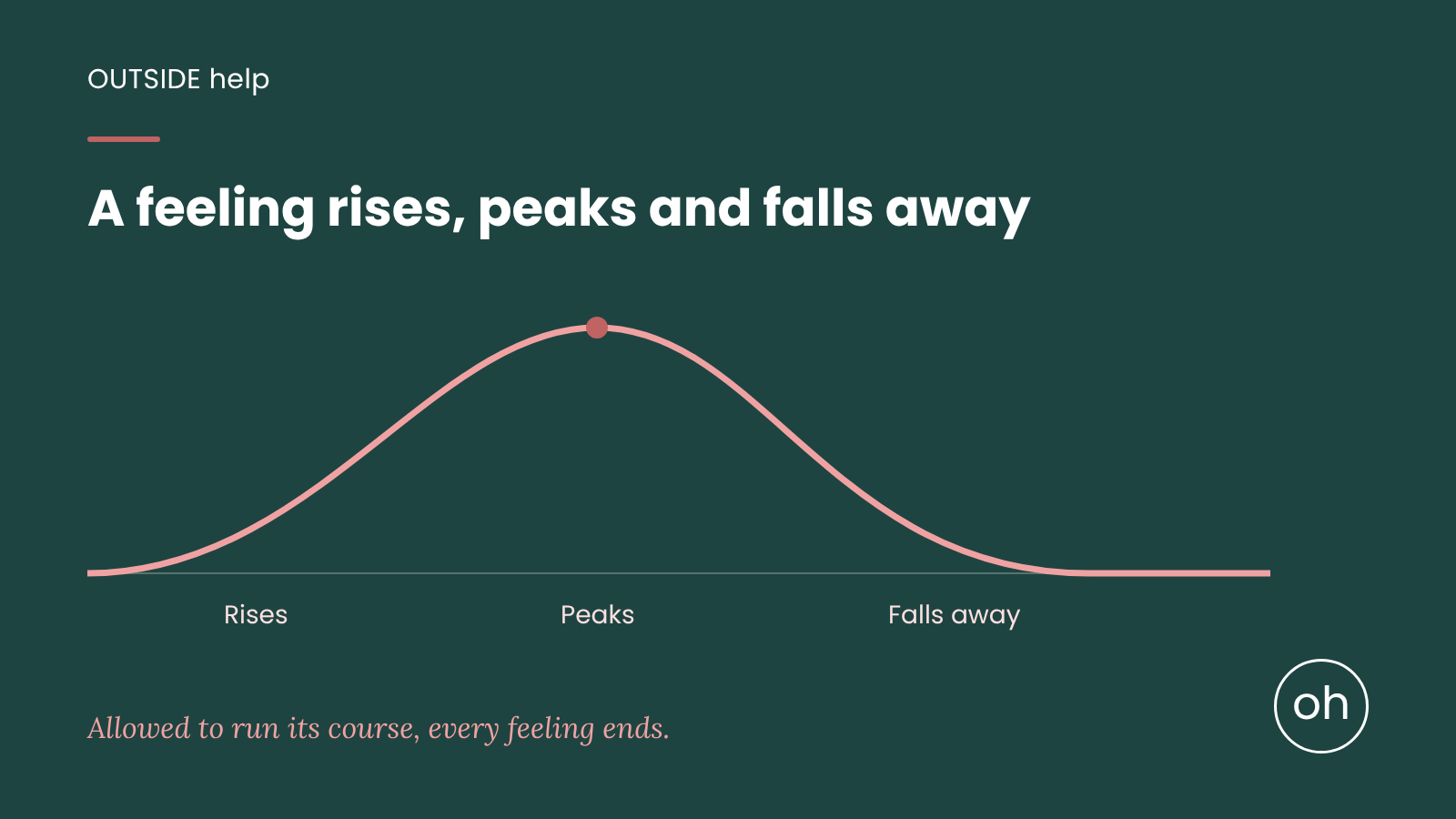
This is the promise at the heart of the book. A feeling you stop resisting doesn't last forever. It rises, peaks and falls away.
You become the witness of the feeling rather than the feeling itself. Over time you begin to understand experientially that you are not your thoughts or emotions. You are that aspect of consciousness which is witnessing them. That's the pathway of surrender Hawkins describes.
Reading Hawkins for the first time? The Map of Consciousness explained gives you the framework the book is built on.
Ready to learn how?
If you've read Letting Go and you're ready to put it into practice, then you're ready for OUTSIDE help. I teach you how to let go in the moment, as life happens. Read my answers to the most frequently asked questions.
If you're interested in working with me, check out my letting go coaching services.
If you're ready to talk about how letting go can benefit your life and explore working with me, book a discovery call today to begin the journey towards freedom.
